Ports

Fraser Wharves terminal site

Vancouver Fraser Port Authority Seeking Operator for Fraser Wharves Terminal

July 24, 2026 - The Vancouver Fraser Port Authority is looking for an operator for its Fraser Wharves terminal site in Richmond, as part of work to expand trade capacity at the Port of Vancouver in support of federal government efforts to double exports to non-U.S. markets over the next decade.

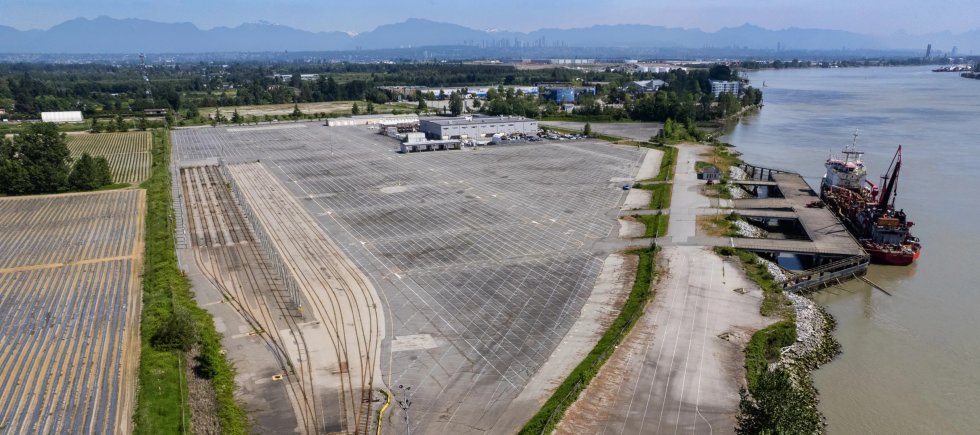
The 40-acre port terminal site in Richmond is the first major terminal opportunity at Canada’s largest port in a decade, offering potential operators a brownfield site with existing marine, rail and road connections. There are 29 major terminal sites at the Port of Vancouver, each moving millions of tonnes of cargo for Canada every year from grain and fertilizer exports to containerized and auto trade.

“The Port of Vancouver is helping unlock Canada’s economic potential by building the trade capacity needed to move more of the products Canadians make, mine, harvest and grow to more customers around the world,” said Peter Xotta, President/CEO at the Vancouver Fraser Port Authority. “This is a very rare opportunity to develop and operate a new terminal within a proven port ecosystem that has unparallel access to the Indo-Pacific region and beyond. We look forward to finding the right partner to turn this site into a terminal that can deliver Canadian commodities to world markets and support trade diversification work.”

The port authority is engaged with the federal Major Projects Office on this site as part of the Government of Canada’s Port of Vancouver Gateway Strategy. The Major Projects Office may support the port authority with this process to ensure the project is efficiently advanced, while respecting Indigenous rights and safeguarding the environment.

The Port of Vancouver is Canada’s largest and North America’s most diversified port, moving more cargo than the next five largest Canadian ports combined. Connecting Canada to more than 170 international markets, the port is a critical gateway for Canadian trade — with over 85% of cargo handled supporting commerce beyond the U.S.

The terminal site, at 13800 Steveston Highway, was previously used as an auto terminal, but was consolidated under the Annacis Auto Terminal Optimization Project and is now free to support new trade opportunities.

The brownfield opportunity features:

  • Deep-sea vessel access via the Fraser River and an existing marine berth
  • A fully paved, secured and fenced site with existing rail and road infrastructure
  • Rail service is via CN, including nine existing on-site tracks and expansion opportunities
  • Highway access, with Highway 99 just 1.5km away

Dry bulk export volumes have grown 12% in the last five years, driven by strategic investment and global demand for high-quality Canadian commodities. The Port of Vancouver moved a record 131 million metric tonnes (MMT) of bulk cargo in 2025, including approximately 30 MMT of grain, 11 MMT of potash fertilizer and 27 MMT of petroleum products.

The port authority expects to conduct a two-stage selection process, with qualified interested parties invited to submit an Expression of Interest for the site before 5 p.m. on September 11, 2026.

The Port of Vancouver is Canada’s gateway to diverse markets, enabling trade of approximately $365 billion every year with 170 countries. Located on the southwest coast of British Columbia in Canada, its 29 major deep-water terminals and more than 1,000 tenants move goods and people across five sectors (auto, bulk, breakbulk, container and cruise). The port is made up of approximately 16,000 ha of water, 1,500 ha of land and 350 km of shoreline, extending across Burrard Inlet, Fraser River and Roberts Bank.

SOURCE: Port of Vancouver


PhilaPort

PhilaPort Ranked Nation’s Most Productive Container Port for Third Consecutive Year

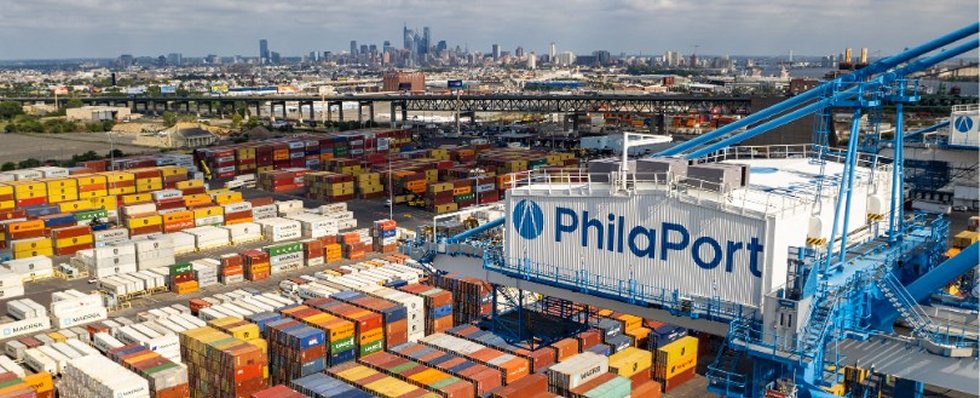
Philadelphia, PA (June 18, 2026) – PhilaPort has once again been named the most productive container port in the United States, according to the 2025 Container Port Productivity Index (CPPI), published by the World Bank and Standard & Poor’s (S&P). Widely recognized as the premier global benchmark for container port efficiency, the CPPI evaluates ports based on operational performance metrics that measure how effectively cargo moves through terminals.

In 2025, container cargo activity through PhilaPort supported more than 8,000 direct, indirect, and induced jobs, generated more than $905 million in labor income, and contributed nearly $1.2 billion in economic output throughout Pennsylvania.

The ranking marks the third consecutive year that PhilaPort has earned the top position among U.S. ports.

“Strategic investments by the Commonwealth of Pennsylvania in port facilities and transportation infrastructure continue to deliver results,” said PhilaPort Board Chair Michael Pearson. “Shippers and ocean carriers depend on cargo moving safely, efficiently, and reliably. This recognition confirms that PhilaPort delivers that performance better than any other port in the nation.”

PhilaPort was the only U.S. port ranked among the CPPI’s Global Top 50, ranking 48th worldwide and second overall in North America. The port was also the only U.S. port to place among the Top 20 for performance improvement between 2020 and 2025.

“The credit for this achievement belongs to our dedicated waterfront workforce, our terminal operators, and the entire PhilaPort team,” said Richard Lazer, Executive Director and Chief Executive Officer of PhilaPort. “This recognition reflects years of investment by the Commonwealth, our terminal operators, and our port partners to strengthen infrastructure, improve operations, and enhance cargo flow throughout the port. We are also grateful for the leadership of former CEO Jeff Theobald, whose efforts to modernize infrastructure and expand terminal capacity helped position PhilaPort for continued success.”

Now in its fifth year, the CPPI evaluates 403 container ports worldwide using data that measures key performance indicators, including vessel turnaround times and overall port efficiency. The index relies primarily on AIS-based vessel call records and port and terminal operating data.

In addition to its strong CPPI performance, PhilaPort continues to lead the industry in cargo velocity, truck processing times, gate efficiency, and overall terminal operations. These advantages support the efficient movement of goods throughout Pennsylvania and the broader Mid-Atlantic region while strengthening supply chains for businesses and consumers alike.

The CPPI report highlighted “the growing recognition of ports as critical enablers of trade, competitiveness, and economic development,” noting that while port infrastructure requires significant investment, the resulting benefits include job creation, export growth, and broader economic gains.

According to the report, the CPPI “allows policymakers, port authorities, operators and development partners to observe how port performance evolves, responds to external shocks, and compares to peer groups.”

“With the additional land that we have acquired, as well as a new intermodal rail facility and our infrastructure improvements, we are confident that we can grow productivity even further,” Pearson added.

Significant investments by Holt Logistics, operator of Packer Avenue Marine Terminal, have also helped to drive this success, including new cargo-handling equipment, technology upgrades, refrigerated container infrastructure, and on-dock inspection facilities.

The benefits of a highly productive port extend far beyond terminal gates. Efficient cargo movement helps lower transportation costs, strengthen supply chains, attract additional shipping services, and support thousands of family-sustaining jobs throughout Pennsylvania and the Delaware Valley.

Lazer concluded, “We have the best labor force and excellent facilities. With continued Commonwealth investments, we can further improve our global standing, grow container volumes, and attract additional ocean carrier services. Global shippers and ocean carriers look closely at productivity rankings when making routing decisions, and our performance helps position Pennsylvania for long-term economic growth.”

SOUCE: Philadelphia Regional Port Authority

 

Liebherr Crane

Third New Container Crane Begins Operations at JAXPORT

May 12, 2026 - A third new 50-gauge ship-to-shore container crane moved its first container on May 6, officially entering service at the Jacksonville Port Authority’s (JAXPORT) Talleyrand Marine Terminal. Manufactured by Germany-based Liebherr Crane Company, the crane features a 100-foot lift height and can reach across 17 containers on a ship’s deck, expanding cargo-handling capabilities at Florida’s largest container port.

This crane is the third of three new Liebherr container cranes added at JAXPORT over the past year. Two entered service in January at the port’s Blount Island Marine Terminal. All three cranes were purchased as part of a multi-year, $93 million initiative to modernize JAXPORT’s crane fleet, including $53 million in state funding over the past two years for crane purchases and upgrades.

“With support from our partners at the State of Florida, we continue to make strategic investments that create economic growth and support jobs,” said JAXPORT CEO Eric Green. “All three of the new cranes we’ve added over the last year ensure JAXPORT is well positioned to keep cargo moving efficiently for our customers and community.”

Located in the heart of the Southeast U.S., JAXPORT is Florida’s No. 1 container port by volume and the nation’s third largest vehicle-handling port. JAXPORT offers fast and efficient vessel operations with a 47-foot deepwater shipping channel, two-way ship traffic, and same-day access to 98 million U.S. consumers. Cargo activity through Jacksonville’s seaport supports more than 258,800 jobs and $44 billion in annual economic impact for the region and state.

SOURCE: Jacksonville Port Authority (JAXPORT)


Avondale Global Gateway

Suzano Selects Avondale Global Gateway in Louisiana for Imports of Pulp

April 30, 2026 - Avondale Global Gateway (AGG) and Suzano today announced a five-year terminal services agreement that will bring regular wood pulp imports back to Louisiana for the first time in more than 30 years.

Under the agreement, AGG will serve as one of Suzano’s terminals in the Central Gulf Coast for their wood pulp shipments arriving from Brazil, to be distributed across North America by rail. The first vessel is scheduled to arrive at AGG in the first week of May this year.

The agreement marks a significant milestone for both Louisiana and Suzano, the world’s largest pulp supplier and one of Brazil’s biggest exporters which has been present in the American market for over 40 years. Suzano’s decision also aligns with its continued expansion in the region, including its 2024 acquisition of mills in Arkansas and North Carolina from Pactiv Evergreen.

As part of its North American growth strategy, Suzano selected Avondale following a two-year evaluation process focused on logistics efficiency, infrastructure, and long-term scalability. The Avondale operation will support this strategy by creating a more centralized and efficient logistics footprint on the Gulf Coast.

“An efficient and resilient supply chain is essential to our business, and Avondale offers the combination of river access, rail connectivity, port infrastructure, and operational flexibility we were looking for,” said Juliana Vizintim, Operations Executive Manager at Suzano. “This partnership strengthens our Gulf Coast logistics platform and enhances supply assurance and efficiency for our customers across North America.”

To support the new operation, AGG has completed major upgrades to 245,000 square feet of warehouse space, including new concrete flooring, five additional loading doors, loading platforms, overhead awnings, and a laser fire detection and suppression system. These improvements were made specifically to meet Suzano’s operational requirements.

In parallel, a $13 million rail expansion is underway at Avondale, funded in part through Louisiana Economic Development’s FastSites program.

Together with other site improvements, total investment tied to the Suzano operation is expected to exceed $20 million over time.

“Bringing wood pulp back to Louisiana is a major milestone,” said Adam Anderson, Chairman and CEO of T. Parker Host, parent company of Avondale Global Gateway. “This is new activity for the state, new jobs, and meaningful investment at Avondale. It reflects the kind of long-term industrial growth we believed this site could support and shows what’s possible when the right partner, infrastructure, and location come together.”

Rail service will play a central role in the operation, allowing cargo to move efficiently from vessel to warehouse to inland destinations across the United States. AGG worked closely with Union Pacific to align infrastructure and service capacity ahead of launch.

Since T. Parker Host acquired the former Avondale Shipyard in 2018, the 275-acre site has been steadily redeveloped into a multimodal logistics hub.

About Avondale Global Gateway

Avondale Global Gateway is a multimodal logistics and terminal facility located on the Mississippi River in Jefferson Parish, Louisiana. Operated by T. Parker Host, the site offers deepwater dock access, large-scale warehousing, and Class I rail connectivity, supporting bulk and breakbulk cargo flows across North America.

SOURCE: Hawthorne Advisors for Suzano


Port-of-Rio-Grande-do-Sul - pulp

CMPC and Neltume Ports Form JV to Build Port Terminal in Rio Grande do Sul, Brazil

Jan. 22, 2026 - CMPC Celulose and Neltume Ports have joined forces to form the joint venture Terminal Rio Grande do Sul S/A, with the objective of establishing a terminal dedicated to general cargo handling, focusing on cellulose, in the Port of Rio Grande do Sul.

Early in December, Terminal Rio Grande do Sul obtained, from the National Agency for Waterway Transportation (ANTAQ), after a public consultation, recognition of the viability for entering into an Adhesion Contract. This instrument enables the construction and operation of a Private Use Terminal (TUP) in the municipality of Rio Grande, to be signed between the Ministry of Ports and Airports, as the Granting Authority, and the company.

On Dec. 19, the Adhesion Contract was signed between the National Secretariat of Ports, the Ministry of Ports and Airports, ANTAQ, and Terminal Rio Grande do Sul S/A, granting the company the right to implement and operate its port facilities.

The project foresees the construction of two berths for ships, two berths for barges, and a warehouse with a static capacity of 194,000 tons of pulp, significantly expanding the logistical capacity of the Port of Rio Grande.

Estimated investments total R$ 1.5 billion. During the implementation phase, it is expected to generate more than 1,200 jobs. In the operational phase, the terminal should create approximately 450 direct jobs and more than 2,100 indirect jobs, including casual workers and truck drivers.

The project also includes a transfer of R$ 142.7 million to Portos RS, specifically for the dredging of the Access Channel and the Turning Basin of the New Port, benefiting all cargo handled in this port area.

The next steps include the Transfer of Use of the land, currently being processed by the Superintendence of Federal Assets (SPU). Next, a public hearing is planned, as well as obtaining the Preliminary License and the Installation License from FEPAM/RS.

SOURCE: Portos RS

Portos RS is a public company responsible for organizing, managing, and overseeing the entire waterway port system of the state of Rio Grande do Sul. This system includes the public ports of Rio Grande, Pelotas, and Porto Alegre, as well as 17 privately operated terminals. It comprises over 754 km of navigable waterways with ample capacity to accommodate new industrial complexes.

 
<< first < Prev 1 2 3 4 5 6 7 8 9 10 Next > last >>

Page 1 of 33