|
|
|
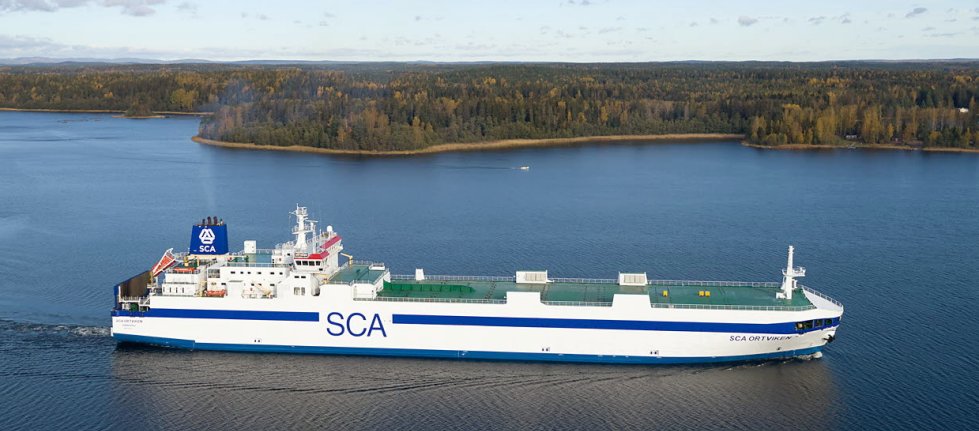
SCA Unveils Plan to Reduce Emissions from Its RoRo Vessels in Sweden by 40 Percent
March 2, 2026 - SCA announced plans to implement changes to its sea transport using RoRo vessels (Roll-on/Roll-off) by reducing speed, increasing vessel load factors, and adjusting how the Swedish ports in Umeå and Piteå are used. One effect of these changes is that emissions from the vessels will be reduced by approximately 40 percent.
From 1 October 2026, SCA will change the structure of its vessel departures from Umeå. The changes apply to vessels where cargo is driven on and off on their own wheels, commonly referred to as RoRo vessels.
Currently, the vessels operate three times per week — twice to Kiel and once to London and Rotterdam. Under the new structure, there will be two weekly departures: once per week to Kiel and once per week to London and Rotterdam.
The change means that the vessels will operate at a slower speed of 11–12 knots, compared with the current approximately 15 knots. Furthermore, the vessels will have a significantly higher load factor for northbound cargo.
Southbound cargo that does not fit will be transferred to other solutions. This frees up time in the schedule, making it possible for vessels that previously only called at Umeå to also call at Piteå and the Haraholmen port area. There, the vessels will load production from SCA’s mill in Munksund and deliver recycled fibre and other goods in Piteå. The previous rail solution between Munksund and Umeå will therefore no longer be needed in the future.
“For SCA, this is an efficiency measure where, through smart logistics planning, we can reduce emissions significantly — an estimated 40 percent,” explained Magnus Svensson, Senior Vice President, Sourcing & Logistics at SCA. “This brings a direct benefit in the form of reduced emissions, but ultimately it also becomes an economic efficiency measure since new EU regulations impose a high and continually increasing cost on emissions from sea transport.”
The change means that around 550,000-600,000 tonnes of goods per year to and from the Munksund mill will in the future be loaded in Piteå. Together with SCA’s current sawmill volumes of approximately 300,000 cubic metres, SCA will become one of the port’s largest customers.
It also means that SCA is expected to load around 300,000-400,000 fewer tonnes in Umeå.
“Our presence in Piteå increases significantly, and this will of course create an opportunity for us, together with the port and ShoreLink, to further develop logistics from the municipality,” Svensson pointed out. “As for the situation in Umeå, SCA has growing volumes to and from the Obbola paper mill, so even though volumes from the Munksund mill decrease in Umeå, the net effect will not be that large.”
With headquarters in Sundsvall, Sweden, SCA offers packaging paper, pulp, wood products, renewable energy, services for forest owners and efficient transport solutions.
SOURCE: SCA |
|
SCA to Increase Price for NBSK Pulp in Europe
 Feb. 13, 2026 - SCA announced that it is increasing the price of NBSK pulp (Northern Bleached Softwood Kraft) in Europe by US $100 per ton.
The new price will be US $1,710 per ton, effective for deliveries and invoicing from March.
Pulp Market
In SCA's fourth quarter 2025 earnings summary, the company reported "average selling prices in the pulp segment decreased compared with the preceding quarter, driven by lower underlying prices and a weaker market mix. Market prices for NBSK pulp in the US and China fell slightly in the fourth quarter, while the market price in Europe remained stable at a low level. Demand for pulp was good in China during the quarter but remained weak in both Europe and the US. SCA's delivery volumes for the fourth quarter were higher compared with the preceding quarter and year-on-year. Global producer stocks were stable during the quarter."
SCA Pulp Production
SCA produces pulp at its two pulp mills in Sweden. The Östrand pulp mill has the capacity to produce 900,000 tons per year of NBSK, while SCA's Ortviken mill has the capacity to produce 300,000 tons per year of CTMP (chemi-thermomechanical pulp). The Östrand pulp mill is one of the largest and most cost-efficient production lines for NBSK in the world and is also a net producer of green electricity and produces biochemicals such as tall oil and turpentine.
With headquarters in Sundsvall, Sweden, SCA offers packaging paper, pulp, wood products, renewable energy, services for forest owners and efficient transport solutions.
SOURCE: SCA |
Nippon Paper Resources Australia Forms JV Wood Chip Export Business in New Zealand
 Feb. 6, 2026 - Nippon Paper Resources Australia, a wholly owned subsidiary of Nippon Paper Industries, has entered into an agreement to jointly acquire all the shares of Marusumi Whangarei Company Limited ("MWC"), a New Zealand-based softwood chip production and export company currently jointly owned by Marusumi Paper Company and Marubeni Corporation.
The acquisition will be concluded in partnership with Pentarch Forestry, a diversified Australasian timber manufacturing and export company. Upon completion of the transaction, the planned shareholding ratio will be 70% for Nippon Paper Resources and 30% for Pentarch Forestry.
The share transfer is expected to be completed by the end of February 2026.
Following the acquisition, Nippon Paper Resources and Pentarch Forestry plan to enter into a formal joint venture shareholders' agreement and jointly operate the business. MWC will subsequently be renamed NP Wood Fibre Company Limited.
NP Wood Fibre will operate a major New Zealand softwood chip production and export business, leveraging off the country's abundant forest resources and positioning itself to meet the anticipated growth in global demand for softwood chips (Pinus Radiata) for pulp and paper manufacturing. The company will take over MWC’s woodchip handling facility at Northport (Marsden Point) in the Whangarei area of Northland, New Zealand.
For Nippon Paper Industries, the transaction supports the diversification of procurement sources and the establishment of a stable supply of softwood resource for the Japanese market.
In collaboration with Pentarch Forestry, NP Wood Fibre will also market softwood chips across the Asian market, thereby enhancing the revenue potential of the Nippon Paper Group's timber-related businesses.
Furthermore, NP Wood Fibre will combine the Nippon Paper Group's expertise in hardwood plantation management, woodchip production and export operations in Brazil and Australia with PF's capabilities across lumber, woodchip, and other timber-related businesses.
With the extensive sales and export experience of both NPI and PF in Australia and New Zealand, the newly established NF Wood Fibre joint venture is well positioned to fully leverage these combined strengths and to further expand the forestry and timber businesses of both partners.
SOURCE: Nippon Paper Industries Co., Ltd. |
|
Task Force Begins Work to Transform Canada's Forest Sector
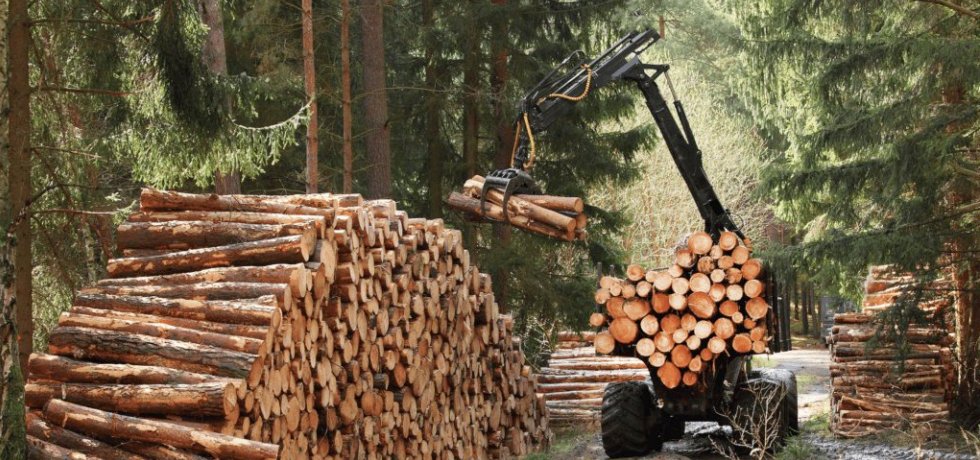
Jan. 19, 2026 - The forest sector is a cornerstone of Canada's economy and identity. For generations, our forests have supported communities and powered local economies. In response to ongoing trade pressures and the need to diversify and ensure long-term competitiveness, the Government of Canada recently announced the launch of a Canadian Forest Sector Transformation Task Force to identify pathways to restructure, retool and transform Canada's forest sector.
Today, members of the Task Force held their first meeting. Over the next 90 days, the Task Force will engage with industry, provinces and territories, Indigenous groups and labour organizations and will gather public comments through a web portal to be launched shortly.
The Task Force's work will focus on strengthening the sector's long-term competitiveness and sustainability, including:
- Expanding modern construction methods, such as mass timber, modular systems and prefabricated building solutions, particularly for homebuilding
- Supporting product diversification, including advanced wood materials and bioproducts
- Strengthening access to domestic and international markets
- Improving productivity through innovation, digitalization and advanced technologies
- Retooling and restructuring the industry to position it for the future
At the end of the 90 days, the Task Force will deliver a report with recommendations to the Honourable Tim Hodgson, Minister of Energy and Natural Resources.
Members of the Task Force include Co-Chairs Ken Kalesnikoff, Principal and Director of Kalesnikoff Mass Timber, and Frédéric Verreault, Executive Vice-President of Chantiers Chibougamau, as well as:
- Lana Payne, National President of Unifor
- Lennard Joe, Chief Executive Officer of the BC First Nations Forestry Council
- Don Roberts, Chief Executive Officer of Nawitka Capital Advisors Ltd.
- Brad Carr, Chief Executive Officer of Mattamy Homes Canada
- Jim Irving, Co-Chief Executive Officer of J.D. Irving Ltd., Kent Homes
- Luc Thériault, Chief Executive Officer of Wood Products, President of Domtar Canada and Co-Chair of the Canadian Lumber Trade Alliance
The Government of Canada is supporting Canada's forest sector and the workers and communities that depend on it while advancing long-term transformation to ensure the sector remains competitive for the long-term.
Quick Facts
The Government of Canada first announced the creation of the Canadian Forest Sector Transformation Task Force on November 26, 2025, as part of new measures to support and transform Canada's forest sector.
Canada's forest sector is a major economic driver, supporting nearly 200,000 workers, including over 11,000 Indigenous people, and contributing more than $20 billion to our GDP. New and innovative forest products, such as engineered timber, biofuels and forest product-based biodegradable packaging materials, are helping Canada reach net zero by 2050 and enabling more sustainable, efficient housing solutions.
SOURCE Natural Resources Canada |
|
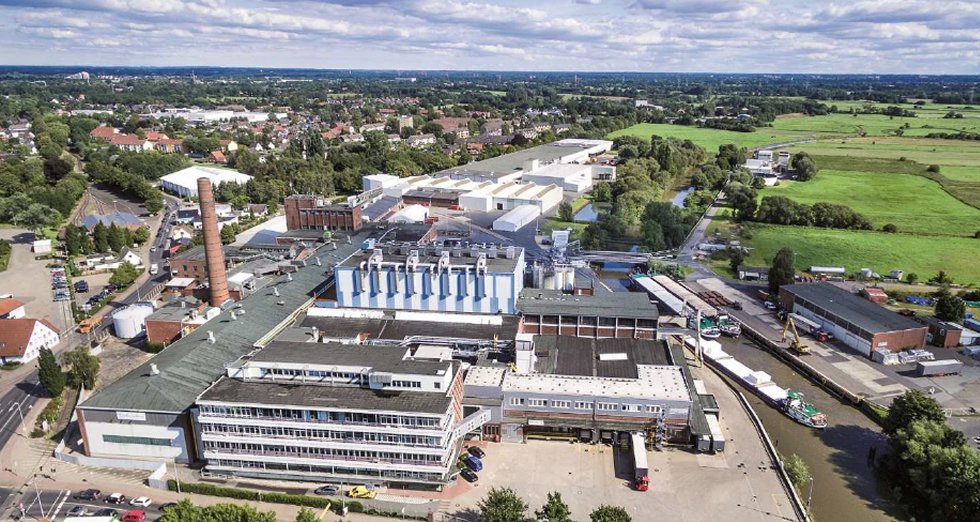
Feldmuehle to End Papermaking in Uetersen; Says Germany Not Interested in Energy-Intensive Industry
Dec. 9, 2025 - German paper producer Feldmuehle announced that it is permanently ending paper production at its paper mill in Uetersen, Germany after 120 years of operation.
The company cited market events and an unhelpful regional government as factors in its decision.
Feldmuehle in June of this year filed for insolvency under self-administration and has since been in the process of restructuring.
In a December 9 letter, Feldmuehle said:
In recent years, our company has made high-quality, capital-intensive investments in sustainability and energy efficiency. We have optimised and modernised processes, committed ourselves to training the next generation, developed new products and reduced our costs — all in a highly competitive environment.
We were confident that we would achieve a turnaround. Unfortunately, due to unplanned market events, the inconclusive discussion on industrial electricity prices and ever-increasing new bureaucratic hurdles, we have come to the conclusion that we will no longer be able to continue production at our site in Uetersen in a sufficiently competitive manner in the long term — it is not economically viable to maintain operations.
It seems that there is no desire for energy-intensive industry to remain in Germany. We have therefore ceased paper production and will be finishing, selling and shipping the paper produced in the coming weeks.
We would like to take this opportunity to thank all our employees who have supported us over the years — despite many personal sacrifices. They fought to the end and always believed that we could maintain our position in the market in the long term.
We would also like to thank our business partners for their decades of trust and excellent cooperation.
After more than 120 years, the tradition of paper manufacturing in Uetersen is now coming to an end.
SOURCE: Feldmuehle GmbH |
|
|
|
|
<< first < Prev 1 2 3 4 5 6 7 8 9 10 Next > last >>
|
|
Page 4 of 39 |